Whether you're renovating your bathroom, updating your kitchen, or seeking home decor inspiration, our blog is your ultimate resource for all things home improvement.
Join us on this journey to transform your house into the home of your dreams.
We are KES. Since 1996, we’ve served over 15 million people worldwide.
Our eco-conscious, certified-quality products make daily routines smoother while helping you elevate your kitchen and bathroom designs. We’re also ready to provide personalized consultations and bespoke services to support your vision as a modern home creator.
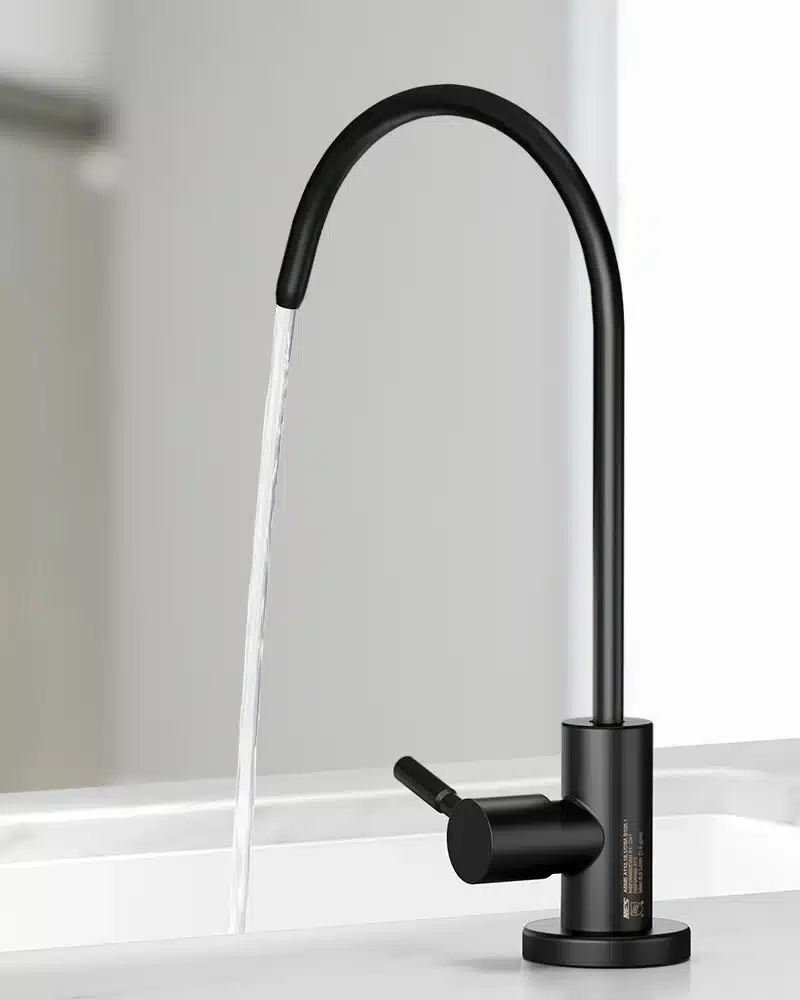
A pull-down faucet lives or dies by its moving parts: the hose, the docking system, and the spray head. Here is how each works, how it fails, and what to check before buying.
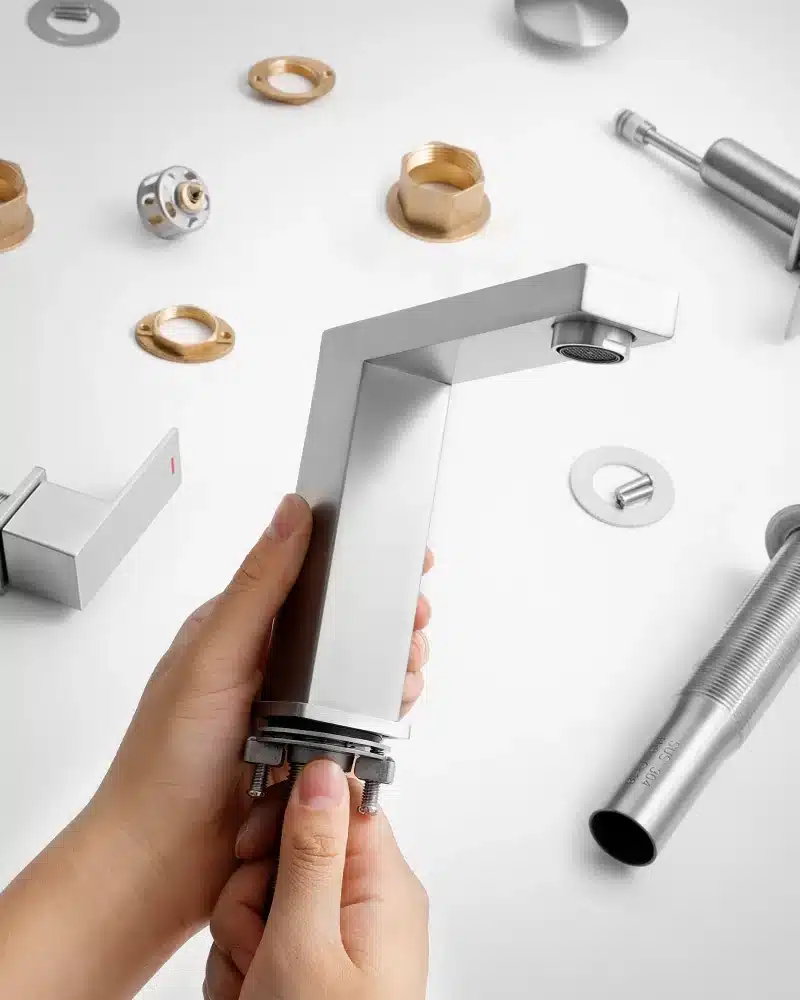
For the parts that hold water pressure — the body, waterway, and valve seat — metal is better than plastic: it tolerates heat, pressure cycles, and installation torque without creeping, cracking, or stripping over the years. Plastic is acceptable in some low-stress roles, and honest brands tell you which parts are which. Here is the fair version of the answer.
Key facts
A faucet holds 40–80 psi of line pressure 24/7 — 8,760 hours a year — whether or not anyone uses it.
It cycles between cold supply and water-heater output commonly set at 120–140°F, every day, for years.
US federal law caps faucet flow at 2.2 GPM @ 60 psi; certified components that touch drinking water — plastic or metal — fall under NSF/ANSI 61.
The duty cycle nobody thinks about
A faucet is not like a kettle you use and put away — it is a pressure vessel that never clocks out. The supply side sits at 40–80 psi around the clock; every hot-water draw swings the wetted parts from room temperature toward 120–140°F and back. Multiply by years and you get thousands of thermal cycles and continuous stress on every joint and thread. Metals shrug this off. Rigid plastics respond with creep — slow, permanent deformation under sustained load — and with fatigue cracking at stress points as they age. That’s the physics behind the whole metal-vs-plastic question, and it’s why where the plastic sits matters more than whether it exists.
Metal vs plastic, part by part
Part
Stress level
Metal advantage
Verdict
Body & waterway
Pressurized 24/7, hot-cold cycling
No creep or fatigue-cracking; holds threads for decades
Metal matters most here
Threaded connections
Wrench torque, re-tightening
Metal threads survive; plastic strips and rounds
Metal
Valve seat area
Moving parts + mineral-laden water
Hard, dimensionally stable
Metal
Cartridge internals
Moderate
Ceramic discs do the sealing; polymer carriers are industry-standard
Mixed is normal, even at premium brands
Aerator shell, sprayer trim
Low
Minor
Plastic acceptable when disclosed
Where plastic is defensible
Being honest: an aerator shell, a soap-dispenser bottle, or a sprayer-hose weight cover in plastic isn’t a durability scandal — those parts see little stress. Cartridge internals across the industry commonly combine ceramic discs with engineered polymer carriers, including in premium brands. The problem is not that plastic exists; it’s plastic in the pressurized path sold under vague words like “metal construction.”
Serviceability: the argument nobody markets
A metal-bodied faucet is rebuildable. Cartridge worn? Replace the cartridge. Aerator clogged? Swap it in a minute. O-ring flattened? Cents. The brass or stainless body — the expensive part — keeps serving through all of it, which is why a well-made metal faucet is a decades-scale purchase. A faucet with a cracked plastic waterway or stripped plastic threads doesn’t get rebuilt; it gets replaced whole and landfilled. Over a faucet’s life, the ability to service the cheap parts while the body endures is worth more than any single spec line — and per EPA WaterSense, even a “minor” failure like a one-drip-per-second leak wastes 3,000+ gallons a year while you postpone dealing with it.
Is plastic in a faucet a health concern?
Not when it’s certified. Components that contact drinking water — plastic or metal — are covered by NSF/ANSI 61 (health effects of drinking-water system components), and lead in metal surfaces is separately limited by NSF/ANSI 372 and California AB 1953. So the case for metal is not that certified plastic is unsafe; it’s about durability and serviceability over decades. A materials argument that pretends otherwise doesn’t survive scrutiny — and doesn’t need to.
How KES draws the line
KES’s Metal First principle: the wet, structural parts of its faucets are solid brass or stainless steel, lead-free under California AB 1953 and NSF/ANSI 372, cUPC and NSF certified (see certifications). Where any other material is used, it’s a deliberate, disclosed engineering choice — not a hidden substitution behind a metal-look finish. See how that plays out across the range in the KES faucet guide.
FAQ
Are metal faucets better than plastic ones?
For the pressurized, wetted parts — yes. For low-stress trim parts, plastic can be acceptable when it’s disclosed.
Is plastic in a faucet unsafe?
Certified components (NSF/ANSI 61) are safe for drinking water. The metal case is durability, not safety panic.
How long should a kitchen faucet last?
Metal-bodied faucets are decades-scale because they stay serviceable — wear parts swap out while the body endures. Early death usually means a cracked body or stripped threads.
Why do faucets have plastic parts at all?
Cost and molding complexity. Reasonable in some roles; the issue is vague labeling of the parts that matter.